



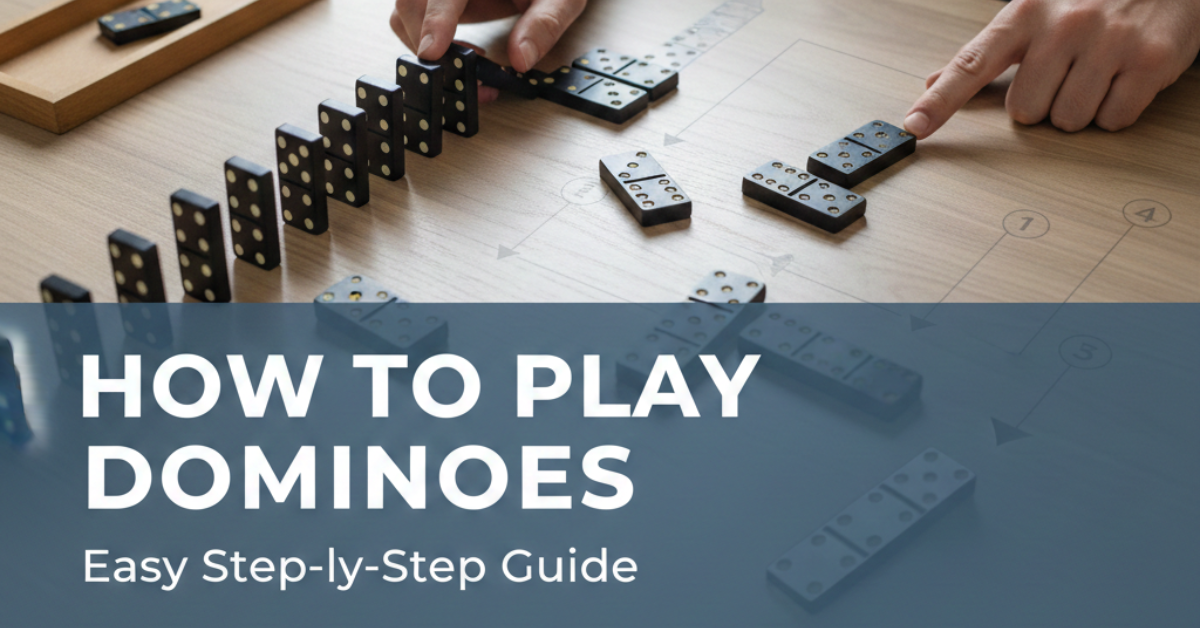
Learn the Essentials: How to Play Dominoes
Dominoes is the perfect game for those who want a mix of chance, skill, and strategy. Everyone from grandparents to great-grandparents has enjoyed this time-honored hobby. Playing dominoes is a great way to start some lighthearted rivalry, whether you’re at home with family or during a picnic in the park.
You may be wondering how to begin exploring the intriguing world of tiles. Never fear! If you follow our detailed instructions, you’ll be playing dominoes in no time. In this lesson, you will discover its fascinating background, the fundamental laws, and even certain tactics that will help you win more often than not. See why this classic game has stood the test of time and enthralled players all across the globe by deciphering the meaning of those vibrant pieces!
The history and origins of dominoes
Dominoes are a game with a long and storied past that dates back to antiquity. Around the 12th century, they were first brought to China, according to most researchers. Rectangular tiles fashioned from bone and ivory were the first iteration.
After gaining popularity in Asia, the game finally reached Europe in the 17th and 18th centuries. After going through a number of changes, it became quite popular, especially in France and Italy.
Playing dominoes became a common pastime and social activity throughout Europe. Because the game was popular among people of all social classes, the word “domino” is believed to have originated from a hooded cloak used by priests.
Dominoes are still played in the same way throughout civilizations, albeit they have evolved into a wide variety of forms and materials. Dominoes is a timeless card game that appeals to players of all ages, whether they’re playing for fun with family or competing in international competitions.
The basic rules and equipment needed for playing dominoes
A standard set of domino tiles is required for one game of dominoes. Each of the twenty-eight pieces of a conventional double-six set is marked with two numbers between zero and six. More advanced games call for bigger sets, such as double-nine or double-twelve.
Get a group of at least two people together, preferably four, for the maximum fun. To start, put all of the tiles face down in the draw pile and draw seven for each player.
In this domino game, each player takes a turn laying their tiles on a level surface in a row that matches the numbers on the ends. When a player is stuck, they take turns drawing from the pile until they either run out of tiles or discover one that may be played.
When a player runs out of cards or when there are no more legal moves, the game ends. House rules and variants selected before to game start may affect scoring.
| Topic | Key Points |
|---|---|
| What Dominoes Is | A fun strategy game using numbered tiles. Easy to play anywhere. |
| History | Originated in China, later spread to Europe; evolved into today’s popular versions. |
| Basic Rules | Match tile numbers; players draw when stuck; game ends when someone plays all tiles or no moves remain. |
| Setup | Shuffle tiles face down, each player draws their set, remaining tiles form the boneyard. |
| Types of Moves | Place tiles, draw when needed, or pass if no moves left. |
| Strategies | Watch opponents, keep varied numbers, block winning players. |
| Variations | Mexican Train, All Fives, Partnerships. |
| Benefits | Improves memory, focus, problem-solving, and social interaction. |
Step-by-step guide on how to set up a game of dominoes
Get all of your dominoes and other game pieces ready. You’ll want a regular set of dominoes, which typically comes with twenty-eight pieces.
After that, decide on a level playing surface. With a table, you can see what’s going on and move about easily.
When everything is set up, turn the dominoes face down and mix them. To make each player’s draw a surprise, mix them up well.
The next step is to divide up the parts. Usually between two and four people will be participating, therefore if there are three or two, each player should get seven tiles and if there are four, each person should get five.
The “boneyard,” made up of the leftover dominoes, is a place where players can draw more pieces as needed throughout the game. Have everyone show their highest double tile or just flip for it to choose who goes first.
You can take help from this video as well:
Understanding the different types of moves in dominoes
To become a domino master, you must learn the movements. Tile placement, boneyard drawing, and passing your turn are the three main sorts of plays.
When you grasp a tile in one hand and place it on the board with its open end facing you, you are placing the tile. By using this move, you can block your opponents’ moves or position yourself for future plays.
If your present tiles aren’t enough to make a move, you’ll have to rely on the boneyard. Both strategy and luck are brought into play by this. Your chances of drawing unlucky tiles increase as you draw more.
When there are no more boneyard pieces to draw from and no legal moves are available, the game is passed. To maintain your position in the game and keep your opponents guessing about your hand, you need to know when to pass smartly.
Tips and strategies for winning at dominoes
Becoming an expert observer is crucial if you want to be a domino master. Try to read your opponents’ movements and come up with a plan to counter them. It would help to know what kinds of tiles they could have before making a selection.
Maintaining a balanced hand is another tactic. Keep a few different numbers on hand so you may change up your plays whenever you choose. Doing so will reduce the likelihood that you will be dealt tiles that cannot be played.
Taking a defensive stance is sometimes as important as taking an offensive one. Blocking a player’s prospective plays by setting down similar numbers limits their alternatives if you see they are near to winning.
Perfect comes with practice. Play a few different kinds of dominoes to get the hang of it. The more you play, the better you’ll get at adjusting your strategy to fit different situations.
Variations of the game and how to play them
Because of its adaptability and the wide variety of possible variants, Dominoes is a game that never gets old. Playing “Mexican Train,” a popular variant, requires players to construct their own domino train while simultaneously contributing to a shared track. Because you can stop your opponents’ trains, this makes the game more strategic.
Another entertaining choice is “All Fives,” in which players try to score points by matching sets of five with the tiles they’ve played. Every move is crucial since this twist adds more scoring chances.
Read “Partnerships” if you’re someone who thrives in collaborative settings. The game promotes teamwork and communication as players create teams and strive for victory.
You may spend hours upon hours of fun with each variant because they all have their own set of rules and difficulties. Discover your preferred style by exploring these alternatives, or try a few different ones for a change of pace during gaming!
Benefits of playing dominoes for mental
There are several advantages to playing dominoes besides the fact that it’s fun. Playing this timeless game regularly helps hone mental abilities like planning and problem-solving. Over time, it can help players become better decision-makers by having them think critically about their decisions.
Plus, dominoes’ social component is priceless. Interactions and bonds are enhanced via playtime with loved ones. Having these kinds of conversations can make people feel less alone and more at home in their community.
You can’t discount the cerebral exercise that dominoes give, which may help with everything from improving memory recall to increasing focus. Playing regularly can help alleviate stress by providing an opportunity to relax and enjoy friendly competition.
Playing dominoes is a great way to relax with friends or to test your brainpower, and it’s also a great way to have fun. To enjoy this classic game, all you need is a set of tiles.


