



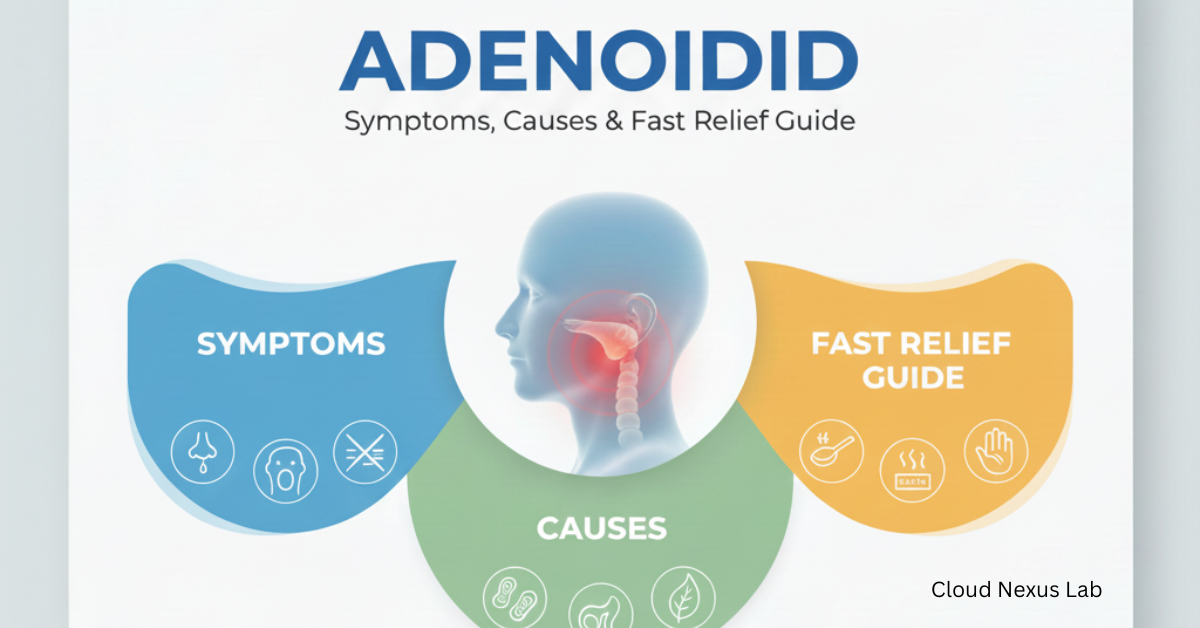
We tend to pay greater attention to the outside aspects of our bodies when it comes to health concerns. However, Adenoidid, which are tiny masses of lymphatic tissue, participate in your immune system and are located in the rear of your throat. Although they are essential, there are instances when they cause inflammation and infection. The discomfort and disruption it can cause to daily living is known as adenoiditis.
If you or a loved one have been dealing with chronic sore throats, stuffy nose, or similar symptoms, it may be worth exploring adenoidid disorders further. Discover the ins and outs of adenoidid with our comprehensive guide. We’ll go over the symptoms, causes, natural cures, medical treatments, and preventative strategies. So you may regain control and breathe easier, let’s illuminate this frequently-overlooked area of health.
What are Adenoidid and Why Do They Cause Problems?
Adenoids are in the posterior part of the nasal cavity; when they become inflamed or infected, the condition is called adenodid. By aiding in the trapping of infections and the production of antibodies, these tiny glands perform an essential function in your immune system.
Despite their importance in protecting children from illnesses, they can pose some issues as they grow older. The adenoids can block the nasal passages when they enlarge, which can happen for many reasons like allergies or infections.
Breathing problems, snoring, and disrupted sleep patterns are common symptoms of this obstruction. As fluid collects below the eardrum, it can lead to recurrent ear infections in certain individuals.
The immaturity of children’s immune systems makes them more susceptible to illness. Their everyday life can be greatly disrupted by recurring bouts of inflammation because of this. In order to locate appropriate treatment choices, it is crucial to understand these problems.
Symptoms of Adenoidid
The wide range of symptoms that adenoidid may cause can significantly impact one’s quality of life. Nasal congestion, which can make it hard to breathe through the nose, is a typical symptom.
Because enlarged adenoids block airflow during sleep, people with adenoiditis may suffer from chronic snoring or sleep apnea. Fatigue and irritation may accompany this disturbance throughout the day.
Another warning sign is a history of ear infections. If the eustachian tubes get clogged due to swollen adenoids, fluid will be trapped and an infection might flourish.
As inflammation spreads from the adenoids to neighboring tissues, it is common to experience sore throats and coughs. As a less well-known but no less painful symptom, foul breath may accompany these others.
The key to getting the help you need and easing the pain that comes with this disease is learning to recognize the symptoms as soon as they appear.
Common Causes of Adenoiditis
Infections frequently cause adenoiditis. Most of the time, it’s viruses and bacteria. Because their immune systems are still maturing, children are especially at risk of contracting these illnesses.
Another important factor is allergies. Pollen, dust mites, and animal dander are some of the environmental allergens that can cause adenoids to swell. Swelling and pain are possible outcomes of this response.
Regular respiratory infections also have a major role. The average child gets sick with a cold or the flu more than once a year. The likelihood of adenoid inflammation rises with each disease.
Problems with anatomy could also play a role in certain instances. Infections can spread more easily when enlarged adenoids obstruct the airways or nasal passages.
In order to develop future treatment and preventive methods, it is essential to understand these common causes.
More like this: Senaven: Natural Relief for Stress and Anxiety?
Natural Remedies for Fast Relief
Adenoid pain can be rapidly alleviated with the use of natural therapies. Inhaling steam is one method that works. The inflammatory tissues can be soothed and the nasal passages can be opened by breathing in warm, humid air.
Some herbal teas, such as ginger or chamomile, which have anti-inflammatory characteristics, might help you relax. Drinking one of these teas will hydrate you and speed up your recovery time.
Nasal sprays with saline are another excellent choice. They maintain the nasal membranes wet and aid in clearing buildup of mucus. If you’re having trouble breathing because of adenoidid, try this easy cure.
Honey has calming properties as well. If you want to protect your throat from coughing pain, try coating it with a tablespoon.
Hydration is of the utmost importance at this time. In addition to improving general health, increasing fluid intake can help thin mucus, making drainage simpler.
Medical Treatments for Adenoidid
It may be required to seek medical attention for adenoidid when symptoms become severe or long-lasting. Physical exams and imaging investigations are the usual tools used by healthcare professionals to diagnose a patient’s condition.
In the event of an infection, medicines are able to alleviate swelling and eradicate any bacterial problems. On the other hand, persistent situations might not always respond well to this method.
Surgical excision of swollen adenoids may be suggested for children who have trouble breathing or who get infections often. A frequent operation that can greatly enhance quality of life is adenoidectomy.
The use of corticosteroids is sometimes recommended for the purpose of reducing nasal passage edema. Medication like this won’t fix the problem permanently, but it will help in the short term.
In order to closely monitor progress and make modifications as needed depending on individual reactions to treatment, it is recommended to have regular follow-ups with an ENT expert.
Prevention Tips for Adenoidid
Preventing Adenoidid begins with practicing excellent personal cleanliness. The danger of infections that cause this illness can be greatly reduced by regularly washing one’s hands.
Importantly, parents should urge their children to avoid being with ill friends. In close quarters, particularly among children, viruses and bacteria may spread at a rapid pace.
The immune system is supported by a well-balanced diet that is rich in vitamins, especially zinc and vitamin C. Your family’s diet should consist primarily of fresh produce.
Maintaining an appropriate level of hydration is also crucial. A wet mucous membrane is less likely to experience irritation and inflammation, thus it’s a good idea to drink lots of water.
It is also crucial to establish a smoke-free zone. Adenoid growth and worsened respiratory problems are both caused by secondhand smoke from cigarettes.
By seeing a doctor regularly, any issues with the adenoids may be caught early on before they become major difficulties.
Conclusion
For kids in particular, adenoidid may be a real pain. Caregivers and parents must be knowledgeable about these conditions and their effects on health. In order to get relief from pain, it’s important to be aware of the symptoms as soon as they appear.
Natural remedies are a great way to supplement medical therapies with easy and efficient answers. Modifying one’s way of life can also greatly contribute to reducing the likelihood of adenoid-related complications.
Managing adenoidid becomes considerably easier when you are aware of the common causes and have preventative methods readily available. When people take an active role in their health, it benefits everyone.
Taking action to alleviate symptoms boosts health and happiness in general. A better tomorrow is within reach with the help of information, empathy, and action—the trifecta necessary to overcome this illness.
Disclaimer:
The objective of this material is purely educational and should not be used as a replacement for advice, diagnosis, or treatment provided by a medical professional. You should never self-diagnose a medical condition—including Adenoidid—without first consulting a doctor or other trained health professional. While this material does cover common symptoms, possible causes, and treatments, it is important to remember that everyone’s situation is unique. What you read here should not replace the counsel of a medical expert, nor should it postpone your pursuit of such guidance. The whole risk for relying on any given information is with you.
You may find this interesting: Inomyalgia: Causes, Symptoms & Effective Relief Strategies