


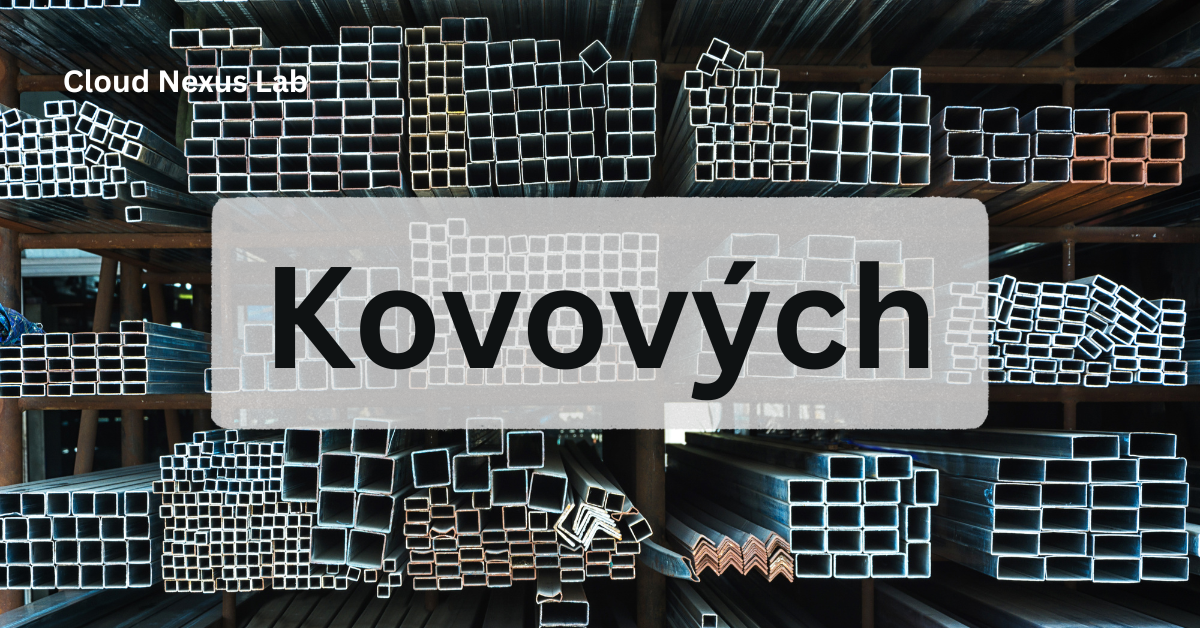
The materials developed by Kovových are leading the way in contemporary engineering and production. From simple implements to intricate machines, these multipurpose materials have revolutionized the manufacturing process. Their one-of-a-kind qualities propel innovation and boost product performance, making them vital in many different industries. New uses and solutions that were previously unimaginable are becoming possible because these materials are adapting to new technologies. This exploration will reveal the significance of it materials in our modern world, whether you’re a specialist in the field or just interested in the science behind them. We should explore in detail what it is about Kovových that is truly exceptional.
Common Types of Kovových Materials
The term “Kovových materials” refers to a wide variety of substances, all of which have their own specific characteristics and uses. Among these, steel is probably the most famous. It is absolutely necessary in building and manufacturing due to its strength and adaptability.
Because to its low density and high corrosion resistance, aluminum stands out among metals. Because of this, it is highly favored by sectors such as aerospace and automotive.
Another important kovový substance, copper is highly regarded for its exceptional electrical conductivity. It has extensive application in electronics and electrical wiring.
Titanium is resistant to high temperatures and has an outstanding strength-to-weight ratio. Medical implants and aircraft parts are two examples of the high-performance uses that appreciate this material.
Novel solutions in many fields have resulted from alloys, which mix two or more metals to improve particular properties. Different types demonstrate the immense potential of it materials while serving different functions.
Strengths and Advantages of Using Kovových Materials
The strength and durability of Kovových materials are exceptional. Because of how well they hold up under pressure, they are perfect for tough uses. Over time, you will save money on upkeep thanks to its longevity.
They are quite adaptable, which is an additional plus. Engineers can design components that satisfy specific criteria by tailoring it materials through various procedures.
Also, the thermal and electrical conductivities of these materials are usually top-notch. Opportunities in the energy and electronics sectors are expanded by this trait.
Also, sustainability is very important. Contributing to environmentally responsible manufacturing techniques, several it alternatives are recyclable.
You can’t deny the visual attractiveness. Kovových materials are well-liked in both consumer and industrial goods due to their ability to offer a smooth appearance without compromising structural strength.
Innovations in the Field of Kovových Materials
Innovations in the realm of it materials are pushing boundaries and are exceptional. Scientists are working on new metals that are stronger and last longer. Industries that rely on lifespan frequently benefit greatly from the improved corrosion resistance that these novel compositions often display.
How kovových materials are approached is being revolutionized by additive manufacturing techniques. 3D printing streamlines production processes while eliminating waste by allowing for rapid prototyping and customisation.
In order to improve the qualities of kovových materials, nanotechnology is also vital. Scientists can make versions that are both lighter and stronger by modifying materials at the atomic level.
Embedded sensors in smart coatings are another promising development. Reduced maintenance costs and the possibility of catastrophic breakdowns are two benefits of their real-time structural integrity monitoring.
These innovations not only boost efficiency, but they also open the door to greener business practices in many other areas. A future full of opportunities and efficiency is promised by the ongoing evolution in this field.
You May Like: Sustainable Cooling for High-Humidity Applications
Applications and Industries That Use Kovových Materials
The special qualities of Kovových materials allow them to find extensive use in many different sectors. These materials are vital for the production of engine parts and structural components, which are used extensively in the automobile sector. With its long-lasting quality, vehicles are guaranteed to meet safety criteria while also improving performance.
The use of kovových materials is also highly advantageous to the aerospace sector. Aircraft structures benefit greatly from their lightweight yet sturdy construction, which helps reduce fuel consumption without sacrificing strength.
To build strong frameworks and infrastructure projects, kovových materials are essential in the building industry. Structures like buildings and bridges rely on them for stability and durability.
In addition, these materials are used by electronics manufacturers in equipment that need to dissipate heat efficiently. Kovových solutions are useful for making everyday devices more energy efficient.
Furthermore, kovových alloys are utilized by medical professionals for surgical tools and implants due to the paramount importance of biocompatibility in these areas. Every use case emphasizes how kovových materials are adaptable in contemporary technology and daily life.
Challenges and Limitations of Using Kovových Materials
There are many benefits to using kovových materials, but there are also some obstacles. One major drawback is that they easily get corroded. Time can wear off protective coatings, even if many kovových alternatives have them.
The manufacturing and processing steps present still another obstacle. Cutting or machining kovových materials frequently necessitates specialist equipment, which could raise manufacturing expenses and lead times.
Another consideration is weight. Although some kovových materials are rather light, others can be rather heavy, which restricts their use in sectors where decreased weight is of utmost importance.
And for some varieties of kovových, recycling might be a complicated ordeal. As manufacturers strive for more eco-friendly methods, this poses a threat to the environment.
Thermal expansion is a concern. The structural integrity and performance in important applications can be impacted by the expansion or contraction of some kovových materials when exposed to changes in temperature.
Future Outlook for Kovových Materials
As long as industries are changing, Kovových materials have a promising future. Technological progress is fueling new developments that increase the strength and adaptability of these materials.
To improve performance while decreasing weight, scientists are investigating novel alloys and composites. Industries that rely heavily on efficiency, such as aerospace and automotive, find this to be of paramount importance.
In the future, sustainability will be equally important. Manufacturers are being pushed to embrace greener techniques without sacrificing quality due to the increasing demand for eco-friendly production methods.
It is possible that sensors and other technologically advanced “smart” materials could soon be available for purchase. These might pave the way for dynamic apps that change their behavior in response to stress or other external factors.
Durable Kovových solutions that can endure harsh environments will be required as the world’s infrastructure expands. The key to realizing their full potential lies in the close cooperation between scientists and prominent figures in the industry.
Conclusion
Materials from Kovových are essential in many different industries, including building and aerospace. Because of their exceptional strength and endurance, among other qualities, they are an integral component of contemporary production. Even more cutting-edge applications and solutions that boost efficiency and sustainability are on the horizon, thanks to the field’s continual developments.
The sector is always adapting to new problems as they crop up, most notably those involving the procurement of materials and the impact on the environment. With the advent of new technologies, lighter and stronger alternatives that can withstand the tough demands of the modern market are on the horizon for Kovových materials, which bodes well for their future.
Kovových materials have a wide range of possible applications. They will definitely play a significant role in developing smarter products in various industries as research continues. To safely utilize these powerful materials, it is important to embrace breakthroughs while also realizing their limitations. This approach maintains a balanced perspective.
Optimism about the future encourages expansion in this industry sector and the exploitation of creative concepts that could reshape our connection with Kovových materials.
Read More: Intégrammes: The Mystery of Visual Logigrams